Ask staff what they did, not what they think. A good staff AI survey asks about the last two weeks of real work, lets people say "I wasn't sure I was allowed," and reaches the leadership team only after someone with no authority over the people answering has read it. Eight questions below do that. Before you send them, have your senior team write down the answers they expect.
Why will your staff survey tell you what you want to hear?
Because the view from the top is rosier than the view from the classroom, and a survey that arrives from the top inherits the rosy view. The evidence is not education-specific, but it is consistent.
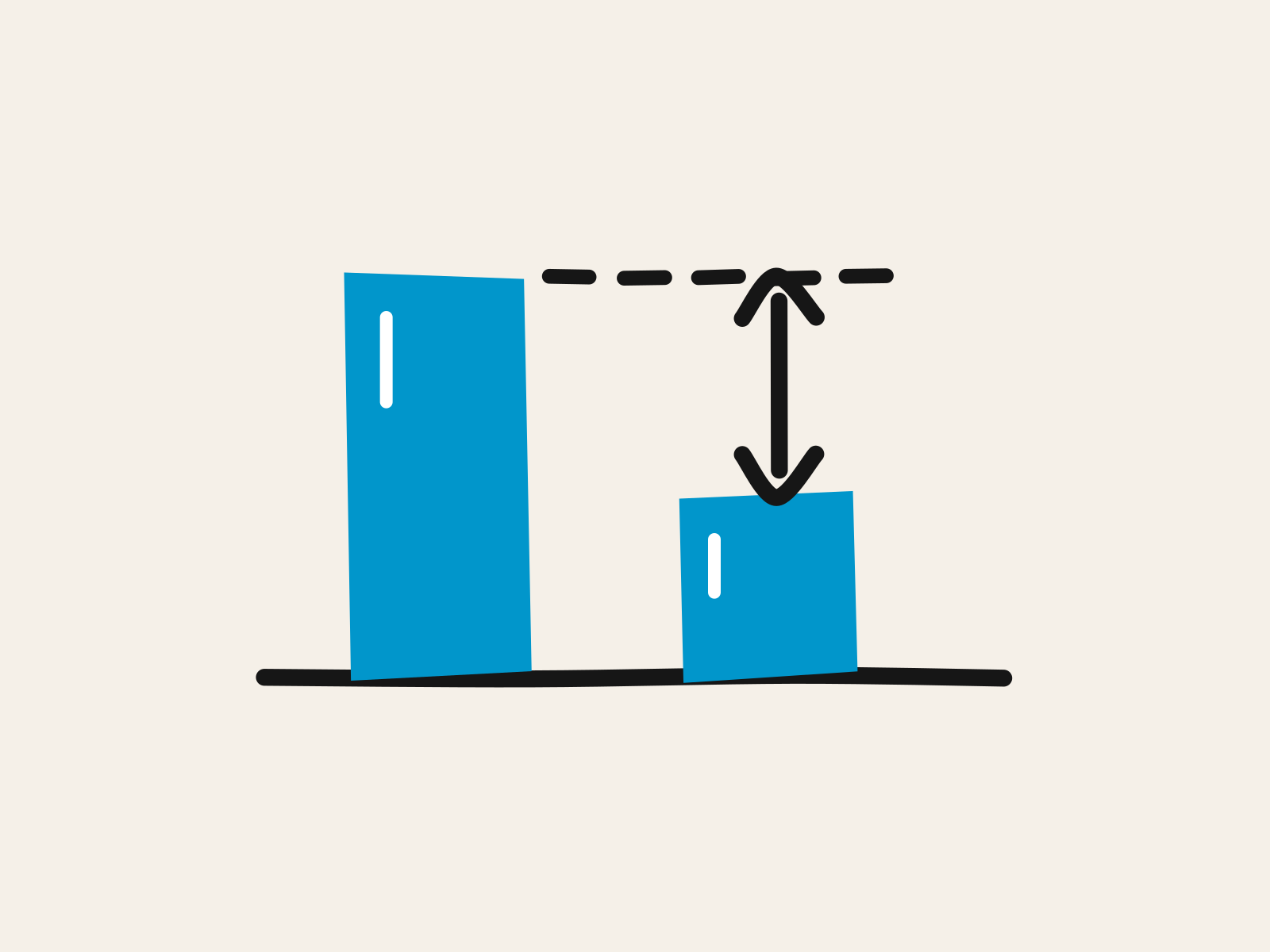
Gallup's research on AI at work, a page it published on July 27, 2026 and updated on September 30, shows frequent AI use among leaders rising from 17 percent in 2023 to 51 percent in the second quarter of 2026. Among managers it rose from 15 to 36 percent. Among individual contributors it rose from 9 to 26 percent. By my arithmetic from Gallup's table, the gap between leaders and individual contributors went from 8 points to 25. Gallup does not define "frequent" on the page or report the sample, and these are self-reported figures, so treat the direction as the finding and the decimals as decoration.
Education points the same way. Michigan Virtual surveyed Michigan K-12 educators with responses collected through July 7, 2026, and published the results on August 17, 2026. Administrators reported higher classroom AI use than teachers did, by about 30 percentage points. The sample was 136 people, drawn through an AI workgroup's membership rather than at random, and only 18 administrators answered some of the questions, so I would not quote the number to a board. I would quote the direction. The RAND Corporation's 2025 national surveys found 45 percent of principals reporting school or district AI guidance, against 34 percent of teachers reporting policies on AI and academic integrity. The questions differ, so the figures do not compare cleanly. Again, the direction is the same: the office sees more than the room does.
You might think the fix is a better-worded survey. Wording helps, but the larger problem is who is asking.
What is the Safe-to-Say Check?
The Safe-to-Say Check is my suggested test for a staff AI survey before it goes out. It is a way of thinking, not a validated instrument.
The Safe-to-Say Check is three questions I ask before any staff AI survey goes out: Could a member of staff give the awkward answer and be sure no one will use it against them? Will the result change a decision already on the calendar? And will staff see what we found before we act on it? A survey that passes all three measures practice. One that fails the first measures good manners.
Could staff give the awkward answer? The awkward answers are the useful ones: "I use my own account because the approved tool is blocked," or "I pasted a class list into it." If a name, a login or a department of three can identify the person, they will write what the headteacher wants to read. Collect nothing that identifies anyone. Report no group smaller than five, which is a convention I use and not a research finding, and ask someone outside the senior team, such as a trustee, a governor or a trusted outside colleague, to hold the raw responses.
Will the result change a decision already on the calendar? A survey with no decision waiting for it is a survey staff will recognize as theater. Name the decision in the invitation: "We are setting the spring training plan and the approved-tools list from this."
Will staff see the results first? The Learning Accelerator, a US education nonprofit, publishes a five-step strategy for surveying staff about AI use. Its steps are to set goals and confidentiality rules, pilot the survey with a small group, look at patterns by subgroup and share high-level findings with staff, use the findings to guide policy or learning, and resurvey. It rests its case on one charter school's experience and reports no outcome data, so it is advice and not proof. Still, it gets the sequence right. A staff that is asked and then told nothing will answer less candidly next term.
Which eight questions should a staff AI survey ask?
Ask in the past tense, about tasks, and always leave people a way out. "Do you feel confident using AI?" measures mood. "Which of these jobs did you use AI for in the last two weeks?" measures practice. These eight take about five minutes.
| # | Ask | What it shows you |
|---|---|---|
| 1 | In the last two weeks, which of these jobs did you use AI for? (planning, resources, feedback on pupil work, reports, emails, admin, data analysis, none) | What staff actually do, by task, not by enthusiasm |
| 2 | Which tools did you use, including any on a personal account? | How much use sits outside what you have approved. See what to do about shadow AI |
| 3 | Did you put anything about a pupil, parent or colleague into an AI tool? Yes, No or Not sure | "Not sure" is the finding. It means the rule has not reached the room. See can staff put student data into ChatGPT |
| 4 | Was there something you wanted to use AI for and didn't? What stopped you? (the rule is unclear, no time, I don't trust the output, the tool is blocked, I don't see the point, I don't want to) | Which obstacle to remove first, and who the principled objectors are |
| 5 | Without looking it up, what is our school's rule on using AI for [reports or marking]? (free text) | Whether guidance survives contact with memory |
| 6 | The last time AI gave you something wrong, what did you do? (checked and fixed it, told someone, used it anyway, can't remember) | Whether errors surface or hide. See what to do when staff get AI wrong |
| 7 | How comfortable would you be telling a senior leader exactly how you use AI? (1 to 5) | A direct reading on the first test of the Check. If this number is low, discount every other answer |
| 8 | If a new colleague asked how AI works here, what would you tell them? (free text) | The culture as staff would describe it to an outsider |
Three questions leaders often add are better left out. "Do you support our approach to AI?" invites politeness. "How often do you use AI: never, rarely, sometimes, often?" lets every respondent define "often" differently. "Have you read the AI policy?" gets "yes" from people who have opened it and closed it. Questions 3 and 5 ask about what happened and what people remember, which are harder to answer for show.
How do you see the gap between your picture and theirs?
Run a prediction round. Before anyone opens the results, ask each member of the senior team to write down three numbers: the share of staff who used AI for planning in the last two weeks, the share who answered "not sure" to question 3, and the share who scored 4 or 5 on question 7.
The distance between those guesses and the results is the most useful figure the survey produces, because it measures the thing Gallup and Michigan Virtual both point to: how far the leadership picture sits from the staff one. This is my own device, not an established method.
Here is a hypothetical, with invented numbers. A secondary school's senior team guesses that 15 percent of staff are unsure about the data rule. The survey says 55 percent. Nobody was careless. The team wrote the data rule, read the data rule and heard no complaints, and every one of those facts is compatible with most of the staff not knowing it. The surprise is the finding, and it tells the team where to start before it argues about anything else.
What I See in Practice
Across the leadership teams I work with, the first staff survey is usually the first time anyone puts a number beside a hunch, and the number is rarely the one the team expected. The surprise I hear described most often is not how much staff use AI. It is how many are unsure what they are allowed to do with it.
As a school trustee I know the other end of this. A termly report arrives saying staff feel positive about AI, and the question worth asking is how the school knows. A survey that passes the Safe-to-Say Check gives the leader an answer to that question and gives the trustee a reason to believe it.
What should you do with the results?
Act on one gap, and tell staff which one. In order:
- Share a one-page summary with staff within two weeks, before the leadership team acts, including what surprised you.
- Pick the single largest gap and give it an owner and a date. Where Is Your School's AI Readiness Gap? sets out a way to rank gaps by harm, and a survey like this one supplies the "what people do" column that article asks for.
- Say what will not change, and why. An honest "not this term" keeps trust better than silence.
- Ask the same eight questions next term. A trend is worth more than a single reading, and it is the only way to find out whether anything you did worked. How do you measure AI maturity? explains why use alone is a poor measure and what to pair it with.
If the survey shows most staff afraid to say what they do, the work ahead is building the conditions in which people will say it. How leaders build AI confidence across a workforce covers that. If it shows most staff using AI on tasks you never approved, a short school AI policy is usually faster than a long one.
What can a staff survey not tell you?
It cannot tell you what staff do, only what they say they do. It also reflects only the people who answer, and those people are rarely a fair slice of the building. In a small school the rule of five means you cannot split by department, and in a staff of fifteen a survey is closer to a conversation with numbers than to a measurement. A small primary school with no IT team can ask the same eight questions on paper slips in a staff meeting and get most of the value. Whatever the size, put the survey beside a look at real work: a sample of the resources staff have made, a glance at what pupils are submitting, a walk past the classrooms.
Staff will tell you the truth about AI when telling it is safe and when it does something. Build both conditions before you send the form.
If your leadership team wants to see its staff's answers set beside its own picture, this is the kind of work I support through school AI readiness work, and for a conference or a staff day I speak on it through my education keynotes.
Sources and further reading
- Gallup. "AI and Workplace Productivity: What Leaders Need to Know." Gallup Workplace, published July 27, 2026, updated September 30, 2026. Read it.
- Michigan Virtual. "AI in Education: A 2026 Snapshot of Growing Use and the Shift Toward Integration." August 17, 2026. Read it.
- Doss, C. J., Bozick, R., Schwartz, H. L., and others. "AI Use in Schools Is Quickly Increasing but Guidance Lags Behind." RAND Corporation, RR-A4180-1, September 30, 2025. Read it.
- The Learning Accelerator and Leading Educators (School Teams AI Collaborative). "Using Surveys to Understand Staff AI Use." Undated. Read it.
Dan Fitzpatrick is the founder of The AI Educator, a Forbes contributor and a school trustee. More about Dan.